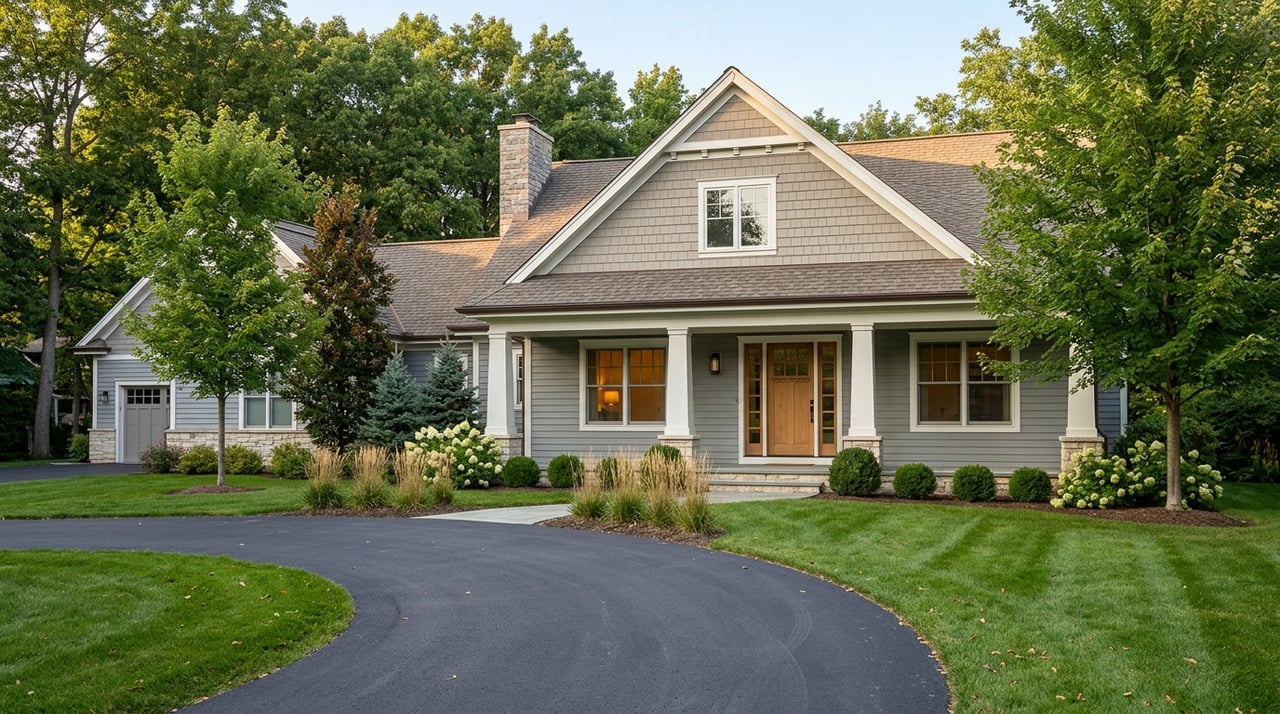
Eden Prairie Or Minnetonka For Executive Relocation?
Relocating for a leadership role often sounds simple on paper until you have to choose the right suburb for your daily life. If you are weighing Eden Prairie against Minnetonka, you are likely looking for more than a house. You want the right commute, the right housing options, and a setting that fits how you live now. This guide breaks down the trade-offs clearly so you can make a confident move. Let’s dive in.
Eden Prairie and Minnetonka are two of the west metro’s most established suburbs, and at a high level, they have a lot in common. In 2024, Eden Prairie had 27,057 housing units and Minnetonka had 27,117, so neither is meaningfully larger from a housing-supply standpoint. Both also had median owner-occupied home values in the mid-$470,000s.
Where the difference starts to show is in population and household profile. Eden Prairie’s 2024 population estimate was 62,905, compared with 52,651 in Minnetonka. Research also points to Eden Prairie having a slightly younger family tilt, while Minnetonka has a larger 65-plus share, which can shape the overall feel from one city to the other.
For many executives, the best answer starts with the commute. If your work, meetings, or regular appointments pull you toward downtown Minneapolis, Minnetonka has a slight edge today. The city has direct access to I-494 and I-394, and it describes I-394 as a primary 15-minute commuter route to downtown Minneapolis.
The Census Bureau’s 2020 to 2024 ACS-based QuickFacts support that advantage. Mean travel time to work was 19.3 minutes in Minnetonka versus 21.4 minutes in Eden Prairie. That does not mean every commute will be shorter, but it does suggest Minnetonka is slightly better positioned for some office patterns.
Eden Prairie stands out in a different way. The city says major trafficways converge there, with strong access from nearly every direction, and it is also tied to Flying Cloud Airport. If your role involves regional travel, frequent airport use, or a wider southwest metro footprint, Eden Prairie can be very practical.
Both cities also stand to benefit from future rail access. The Southwest LRT extension, also called the Green Line Extension corridor in local city materials, is expected to begin passenger service in 2027. Eden Prairie will have four stations, while the corridor also runs through Opus in Minnetonka.
At first glance, pricing feels very close. Eden Prairie’s median owner-occupied home value was $473,900, while Minnetonka’s was $475,800. That means the decision is usually less about broad affordability and more about what kind of home you want within that price band and above it.
Eden Prairie’s housing mix leans more heavily toward attached owner housing. In 2024, the city had 13,788 single-family detached homes, 5,061 townhomes, 387 duplex, triplex, and quadplex units, and 7,821 multifamily units. That works out to about 51% detached homes, 19% townhomes, and 29% multifamily.
Minnetonka also had a strong detached-home base, with 13,909 single-family detached homes in 2024. But its overall mix included fewer townhomes at 2,682 and more multifamily units at 10,207, with 310 duplex, triplex, and quadplex units. That works out to about 51% detached homes, 10% townhomes, and 38% multifamily.
In plain terms, Eden Prairie may appeal more if you want a townhome or attached home without stepping away from a suburban scale. Minnetonka may offer more options if you are considering condo-style or apartment-style living, or if you want more multifamily inventory in the mix.
Eden Prairie’s owner-occupied rate was 76.1%, compared with 71.6% in Minnetonka. That does not make one city better than the other, but it does reinforce the idea that Eden Prairie has a somewhat stronger ownership tilt, while Minnetonka includes more rental and multifamily presence.
For relocation buyers, that can matter if you are deciding between a more traditional suburban ownership pattern and a market with a broader spread of housing formats.
Once commute and home type are clear, lifestyle often becomes the deciding factor. Eden Prairie makes a strong case if you want a city with a broad amenity base and an extensive parks-and-trails network. The city highlights nearly 10,000 acres of parks and open spaces, more than 1,000 acres of developed parkland, 225 miles of sidewalks and trails, 37 parks, and 15 conservation areas.
Eden Prairie also points to amenities such as its community center, senior center, art center, Flying Cloud Airport, and Eden Prairie Center. The city says Eden Prairie Center draws more than 6 million shoppers annually, which speaks to its role as a major retail anchor.
Minnetonka has a different texture. The city says more than 20% of its land area is wetlands and lakes, and it includes more than 268 acres of maintained parkland in 50 parks, more than 100 miles of trails, and 1,000 acres of natural public open space. That gives Minnetonka a landscape shaped in a very visible way by water, wetlands, and natural corridors.
On the convenience side, Minnetonka also highlights Ridgedale, a 1.4 million-square-foot regional shopping center, along with nearby retail, a Hennepin County service center, district court, regional library, YMCA, The Marsh, and the Minnetonka Community Center. For some buyers, that mix creates a very convenient daily pattern centered around established retail and civic nodes.
Neither city is just a bedroom suburb. Both function as major employment centers in their own right, which matters if you value nearby business activity, networking convenience, and local service infrastructure.
Eden Prairie says it has more than 2,800 businesses, including headquarters such as C.H. Robinson, Optum, and Starkey. Minnetonka says it is home to headquarters such as UnitedHealth Group, Cargill, Carlson Companies, and Medica.
For a relocating executive, that means either city can support a professional lifestyle that includes nearby offices, corporate campuses, and business services. The smarter question is not which city is more important, but which one aligns better with your specific work pattern and home preferences.
If you want the shortest version, this is really a decision about commute axis, housing type, and lifestyle texture. Both cities sit in a similar market tier, and both can work well for corporate relocation. The right answer depends on what you want your everyday routine to feel like.
If you are choosing between Eden Prairie or Minnetonka for executive relocation, there is no obvious wrong answer. Both offer established housing stock, strong amenities, and access to major employment centers. The more useful question is which city better supports the way you work, travel, and live day to day.
A focused local strategy can make that decision much easier, especially if you are moving on a compressed timeline or evaluating homes from out of state. If you want a discreet, data-informed approach to narrowing the right fit in the west metro, Jim Schwarz can help you evaluate the options with clarity and confidence.



I pride myself in providing personalized solutions that bring my clients closer to their dream properties and enhance their long-term wealth.