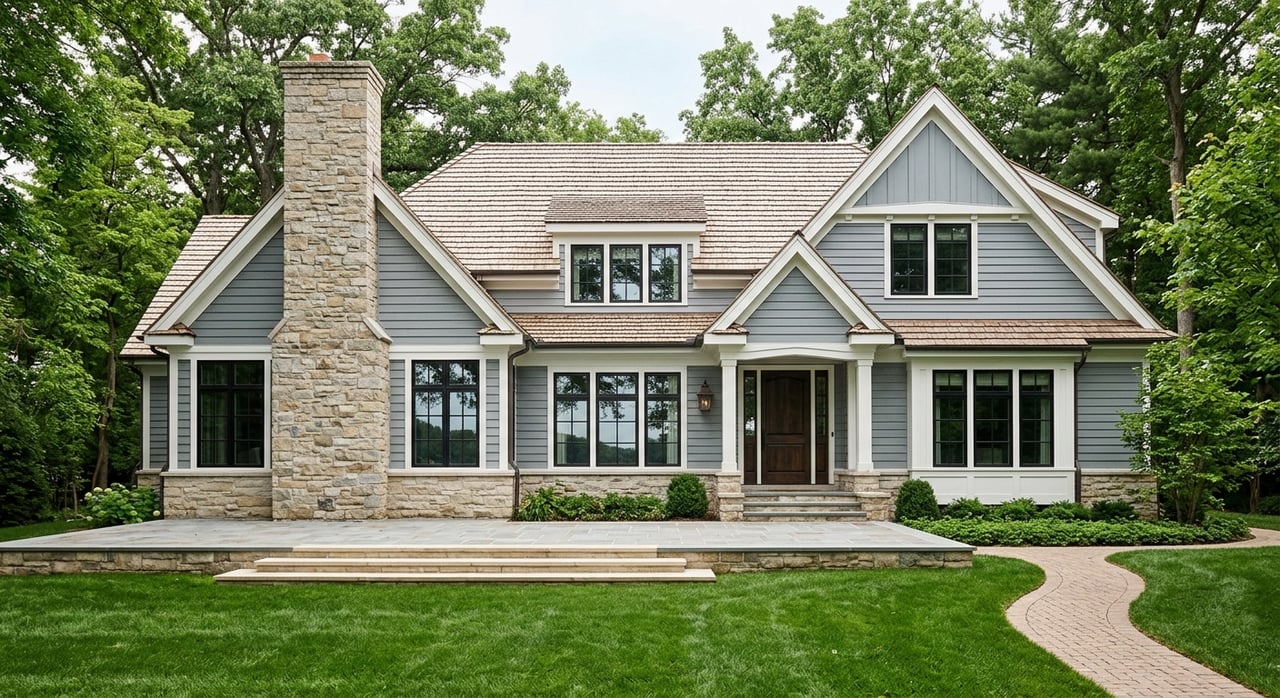
Orono Lake Minnetonka Micro‑Markets For Luxury Buyers
If you search Orono lakefront homes as if they all belong to one market, you can miss what really drives value. Along Lake Minnetonka, Orono functions more like a collection of distinct micro-markets, each shaped by shoreline conditions, access patterns, lot size, and rebuild potential. If you are planning a luxury purchase here, understanding those differences can help you compare properties more intelligently and avoid costly assumptions. Let’s dive in.
Orono sits on the north shore of Lake Minnetonka, and city planning materials note that roughly 4,750 acres, or about 33% of the lake’s surface, are in Orono. Other city planning documents estimate about 40 miles of shoreline within the city. That scale alone helps explain why one city name cannot tell you everything you need to know.
Lake Minnetonka is a connected system of bays and channels, not a single uniform body of water. The city notes that bays differ in depth, shoreline development, road proximity, habitat, and other physical traits. For you as a buyer, that means two waterfront homes in the same city can offer very different day-to-day experiences.
Orono’s housing plan adds another layer. Most urbanized neighborhoods are along the Lake Minnetonka shoreline or within 1,000 feet of it, while additional housing options are mainly expected along the Highway 12 corridor, especially around Navarre. In practical terms, shoreline estates, near-shore homes, and inland properties may all sit in Orono, but they do not behave like the same luxury market.
A bay-by-bay view matters because access, visibility, and privacy vary sharply around the city. Orono’s transportation plan notes that many shoreline corridors are neighborhood-oriented rather than fully public. It also says that about half of the lake-access corridors outside Big Island are undeveloped or closed to public use.
Some access points are steep, seasonal, or suited only for fishing, winter use, or walk-in use. Those details may sound minor at first, but they can shape traffic flow, boating patterns, and how private a property feels. In luxury buying, that kind of nuance often matters as much as square footage.
Crystal Bay and Maxwell Bay often appeal to buyers looking for a more open-water setting. The city notes that Crystal Bay contains Lake Minnetonka’s maximum depth of 101 feet, which supports its identity as a more expansive and visible part of the lake. That can be a meaningful lifestyle factor if you want broad water views and a stronger connection to lake activity.
The city’s transportation plan also shows multiple Crystal Bay access corridors, though some are no longer public or are tied to old platted rights-of-way. In Maxwell Bay, the city notes the DNR Maxwell Bay Access, and it identifies the Noerenberg shoreline as a popular anchoring and swimming area for boaters. Taken together, these details suggest a shoreline environment that can feel more active and more exposed than a quieter bay.
Brown’s Bay, Smith Bay, and North Arm Bay often require a closer look at access conditions. In Brown’s Bay, the city maps a Shoreline Drive fishing spot. In Smith Bay, it identifies winter-only access at one corridor and steep-slope, no-public-use conditions at another.
North Arm Bay has its own mix of constraints. The city notes a paved route usable for boat launching but with no parking available, along with other routes affected by steep slopes, ravines, or undeveloped rights-of-way. The city also identifies Camp Teko on North Arm Bay as a private recreational facility with lake shore.
For you, these details can help clarify whether a property feels quiet and insulated or more influenced by nearby access points and seasonal use. This does not make one bay better than another. It simply means each shoreline segment should be evaluated on its own terms.
Stubbs Bay stands apart because it has a visible stewardship structure. The city says Stubbs Bay includes a fishing dock and winter snowmobile access. The Stubbs Bay Lake Improvement District also notes that 68 affected property owners fund aquatic invasive-species treatment and related bay care.
That combination can matter if you value organized water-quality management and want to understand the ownership environment around a property. It can also affect your planning, since stewardship costs or local assessments may be more visible here than in some other parts of Orono. For certain buyers, that added structure is a benefit. For others, it is simply something to understand upfront.
Some Orono shoreline behaves differently because of topography. The transportation plan describes West Arm shoreline corridors as steep, drainage-oriented, or not developed. It also lists Forest Lake Landing as a walking-use-only access.
If you are comparing these areas with more open or gently sloped frontage elsewhere, the value conversation changes. These properties may be less about broad beach-style usability and more about privacy, tree cover, and the natural character of the land. In the luxury market, that can be a very different buyer profile.
One of the biggest reasons Orono works as several micro-markets is zoning. The city’s zoning map shows a wide range of minimum lot sizes, including LR-1A at 2 acres, LR-1B at 1 acre, LR-1C and LR-1C-1 at 1/2 acre, RR-1A at 5 acres, and RR-1B at 2 acres. That is a major spread within one community.
This matters because lot size often shapes privacy, scale, setbacks, and future flexibility. A large estate parcel and a smaller legacy waterfront lot may both be desirable, but they should not be priced or compared the same way. If you focus only on house size or finish level, you can miss the deeper value drivers.
The city’s land-use plan also describes a historic lakeshore pattern that includes large estate lots with homes set back well from the water, moderate homes on moderate lots with substantial open space, and smaller cottage lots close to the shoreline. That mix still influences what buyers encounter today. In Orono, a property’s footprint on paper rarely tells the whole story.
Luxury buyers often think beyond the current house. You may be asking whether a property supports an addition, a major renovation, or a future custom build. In Orono, those answers can vary even between two homes that look similar from the lake.
The city uses an average lakeshore setback framework tied to neighboring homes. According to the ordinance, the setback line is drawn from the most lakeward protrusions of adjacent principal buildings. Other zoning standards still apply as well, including setbacks, hardcover, lot coverage, and accessory-structure rules.
The city’s lot-of-record ordinance also notes that nonconforming shoreland lots can still be subject to those requirements. This is why rebuild math in Orono is not a quick estimate. It is a property-specific analysis.
Ask these questions early:
Current market snapshots reinforce why Orono should be read in slices. Redfin’s March 2026 Orono market page shows a median sale price of $1.54 million and a median 84 days on market. Realtor.com’s May 2026 Orono market page shows 72 properties for sale, a median list price of $2.07 million, a median price per square foot of $434, and a median 41 days on market.
Redfin’s waterfront-only Orono page shows 49 waterfront homes for sale with a median list price of $1.69 million and a median 36 days on market. These numbers are not necessarily in conflict. They reflect different slices of the market, including sold data, active listings, and a waterfront-only subset.
For you, the lesson is simple. A citywide median can be useful background, but it is rarely enough for a luxury purchase decision in Orono. Bay-specific waterfront comps and like-for-like sold properties usually provide a much more reliable benchmark.
When you evaluate Orono through a micro-market lens, the process becomes clearer. Instead of asking whether a property is simply in Orono, you start asking which kind of Orono it represents. That shift usually leads to better decisions.
A disciplined comparison framework should include:
That kind of methodical review is especially important in a market where local nuance drives value. It is also where experienced guidance can make a meaningful difference, particularly if you are relocating, buying a second home, or evaluating land for future plans.
If you want a clearer read on how a specific Orono property fits within the Lake Minnetonka luxury market, Jim Schwarz offers private, data-informed guidance tailored to bay-level nuance, lot analysis, and long-term value.

I pride myself in providing personalized solutions that bring my clients closer to their dream properties and enhance their long-term wealth.