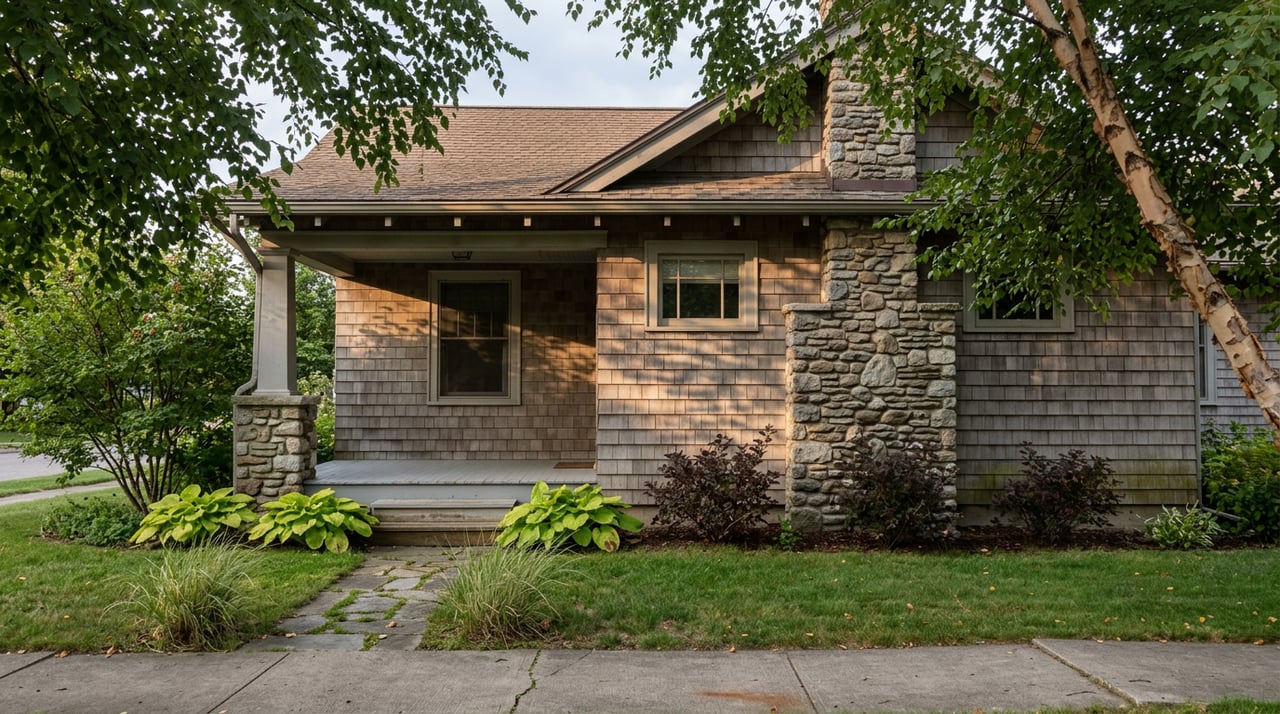
The Real Reason The Cottagewood General Store Never Actually Closes
Friday evening on Cottagewood Avenue starts the same way it has for years. Bikes pile up against the porch rail before the grill even gets hot. Somebody's toddler is eating a popsicle two feet from somebody's grandfather eating a burger, and neither of them seems to notice the other. By the time the food truck parks across the street, half the neighborhood has already walked over from the lake.
It looks like nostalgia. It isn't, entirely. The Cottagewood General Store is still standing because thirty years ago a small group of neighbors made a decision that had nothing to do with charm and everything to do with ownership.
The store opened in 1895 as a grocery for summer visitors staying in the cottages, campgrounds, and hotels that once ringed this stretch of Lake Minnetonka, selling bread, sugar, and flour to people who arrived by boat and train rather than car. It sold gasoline for a stretch once automobiles took over. It watched the Keewaydin Hotel burn down in 1924 and a tornado tear through the neighborhood in 1965, flattening houses across the street while leaving the store untouched.
None of that closed it. What almost did was ordinary business math. Ownership changed hands more than thirty times over the decades, and by 1995 the store was shuttered and listed for sale like any other failing small retailer.
A handful of neighbors called an emergency meeting. Three years later, in 1998, that effort became the Cottagewood Community Foundation, a registered 501(c)(3) nonprofit that today counts more than 206 member families as its support base. The foundation now owns and operates the store outright.
That detail matters more than it sounds like it should. A privately owned general store answers to margins, rent, and whoever holds the deed. A foundation-owned one answers to the families who fund it. That's the actual mechanism behind why Grill Night hasn't skipped a Friday in years, why the shelves still stock the same candy jars and lake-life photos instead of getting flipped into something more profitable, and why the store manager talks about keeping things "authentic to its original stuff" instead of talking about quarterly numbers. The building survived fire and wind because it was built well. It survived 1995 because the neighborhood decided it owned the problem.
"We're here to visit the Cottagewood store because it's our favorite place to be."
That's a customer named Justine Juncker, quoted in a FOX 9 feature on the store this spring. It's a small line, but it's the kind of thing you only say about a place you don't think of as a business at all.
Most of what the store does now happens on a fixed annual schedule, and the schedule itself is worth paying attention to. It includes:
Read as a list, it looks like a tourist brochure. Lived through as a resident, it's closer to a municipal calendar than a marketing plan. These events happen at the store itself or at Cottagewood Children's Park directly across the street, and they've happened long enough that people plan around them the way they'd plan around a school schedule. A store trying to maximize revenue doesn't run a free Easter egg hunt. A store owned by the people attending it does exactly that, every year, without needing anyone's cost-benefit approval.
Ask the person behind the counter who actually comes in and the answer is everybody. People arrive on bikes, on foot, and straight off the lake, some stopping in for bait before fishing, others for an afternoon cone, spanning babies to residents in their nineties. That range isn't an accident of location. It's what happens when a store sits at the center of a neighborhood instead of at the edge of a commercial strip.
Part of that centrality comes from what's within easy reach. The Children's Park sits directly across the street. Cottagewood's two swimming spots on Carsons Bay, known locally as Rocky Beach and Sandy Beach, are a short walk from the store's front porch. And Deephaven itself is one of six communities threaded by the Lake Minnetonka Regional Trail, a 15.8-mile crushed limestone route that runs from Hopkins to Carver Park Reserve through Minnetonka, Deephaven, Greenwood, Excelsior, Shorewood, and Victoria. Three Rivers Park District keeps the trail plowed through Deephaven and the other lake towns from mid-November through March, which means the loop that brings kids in on bikes all summer doesn't fully disappear once the snow starts either.
None of these places were designed around each other. They just happen to sit close enough that a Friday errand run, a swim, and a bike ride can turn into the same outing without anyone getting in a car.
It's easy to file a 130-year-old general store under quaint and move on. The more useful read is that Cottagewood is a neighborhood where residents have already shown they'll organize, fund, and run a piece of shared infrastructure themselves rather than wait for a market to preserve it for them. That's not something you can see on a map or a listing photo. You see it on a Friday evening, in the length of the line at the grill, and in how many of the people in that line have known each other for decades.
If you already live near Cottagewood Avenue, none of this is news. You've been to Grill Night. But if you're the kind of person who reads a story like this and starts wondering what it would take to be one of those 206 member families yourself, that's a different conversation, and one Jim Schwarz has been having with buyers and sellers across the Lake Minnetonka corridor for years. Schedule a private consultation and find out what's actually available near a neighborhood that decided long ago it wasn't going to let its own general store disappear.
I pride myself in providing personalized solutions that bring my clients closer to their dream properties and enhance their long-term wealth.