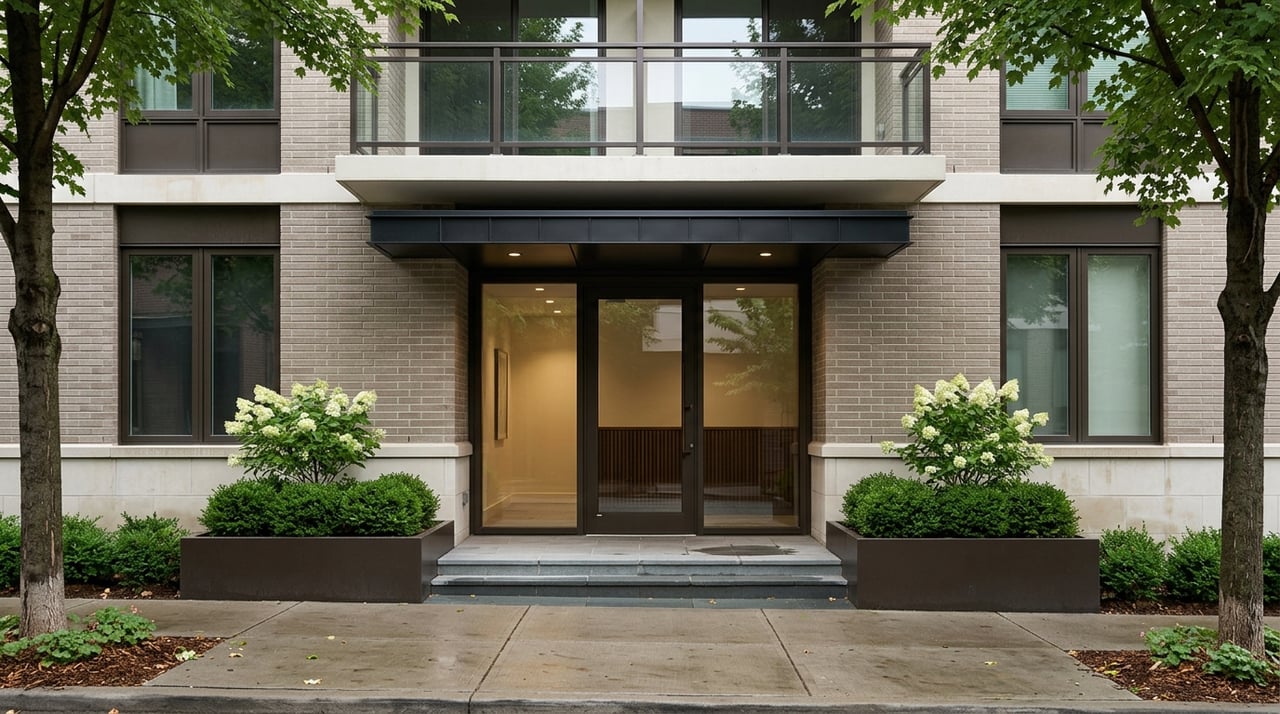
Minneapolis Luxury Condos For Suburban Move-Up Buyers
If you love the space and ease of suburban living but want more access, less maintenance, and a stronger lock-and-leave lifestyle, a luxury condo in Minneapolis may deserve a closer look. For many move-up buyers in places like Wayzata, Minnetonka, and Edina, this is not just a housing decision. It is a lifestyle decision shaped by convenience, building quality, and long-term fit. In this guide, you’ll see how the Minneapolis luxury condo market works, what features truly drive value, and where careful due diligence matters most. Let’s dive in.
The Minneapolis condo market is real, active, and varied, but it is also more selective than the broader housing market. Redfin shows about 600 condos for sale in Minneapolis with a median listing price of $243,000, and those condos are taking about 52 days to sell while typically receiving one offer. By comparison, Minneapolis homes overall sold for a median of $355,000 in March 2026 and went pending in about 30 days.
That gap matters if you are moving from a suburban single-family home into an urban condo. You are not stepping into the same market with a different property type. You are entering a narrower segment where buyer expectations are often more specific and building-level differences carry more weight.
Minnesota Realtors data supports that point. In March 2026, statewide condo sales were down 13.3%, while single-family sales were down just 0.4%. In the 2025 annual Twin Cities report, condo sales fell 2.5% even as single-family sales rose 3.3%.
At the same time, the luxury segment has held up better than the broader condo category. Minnesota Realtors reports that the share of statewide sales over $1 million has tripled since 2020 to more than 3.5%. Luxury buyers also tend to be less rate-sensitive because they often bring equity from a prior home or have wealth tied to financial markets.
In Minneapolis, luxury condo value is rarely about lot size or yard space. Instead, value tends to come from a mix of views, building services, parking, finishes, layout, and overall reputation. If you are used to comparing suburban homes by square footage, lot depth, or backyard privacy, this shift in criteria is important.
Current luxury listings make that clear. The Four Seasons Private Residences penthouse is marketed around 18-foot ceilings, floor-to-ceiling windows, a large terrace, three secure parking spaces, concierge service, spa and fitness access, pools, and restaurant amenities. Other examples like ELEVEN, 929 Portland, Village Lofts, and 1901 Lofts highlight skyline or river views, rooftop decks, heated or underground parking, security, on-site management, and fitness offerings.
For a suburban move-up buyer, the key is to think beyond finishes alone. Beautiful stone, custom millwork, and high-end appliances matter, but they are only part of the package. In a premium condo building, the day-to-day experience often depends just as much on service level, privacy, parking convenience, and how the building is run.
Luxury condos in Minneapolis are generally concentrated in and around downtown. That gives buyers a different kind of lifestyle than what they may be used to in the western suburbs. For some, that means a full-time move. For others, it means a second residence or part-time city home that supports work, events, travel, or seasonal flexibility.
Downtown Minneapolis has a meaningful residential base, with 56,077 people living downtown according to the Downtown Council. Transit can also shape the appeal. Metro Transit says Blue Line service can take riders from downtown to MSP in under 30 minutes.
That kind of access can be especially attractive if you travel often, split time between homes, or want easier proximity to business and cultural destinations. A condo can offer a more streamlined lifestyle without requiring you to give up quality or comfort. The right fit depends on how you plan to use the property.
This is one of the first questions worth answering. If the condo will be your primary residence, your priorities may center on storage, layout flow, pet rules, and day-to-day livability. If the condo will serve as a pied-a-terre, you may focus more on secure parking, concierge services, building access, and lock-and-leave simplicity.
Neither approach is better. What matters is being honest about your actual use pattern. A building that feels perfect for occasional city stays may not feel as comfortable for full-time living if storage is limited or the layout does not support your routine.
This is where a suburban buyer often benefits from a more disciplined evaluation process. In a single-family home, you may be able to renovate or expand your way around a flaw. In a condo, your flexibility is usually more limited, so choosing the right building from the start becomes even more important.
If you are coming from the suburban move-up market, broad price comparisons can be misleading. In March 2026, Minnetonka had a median sale price of $525,000, Edina had a median sale price of $574,000, and Wayzata had a median listing price of $1.772 million. Minneapolis condos, by contrast, had a median listing price of $243,000.
Those figures are not direct apples-to-apples comparisons, but they show how wide the pricing range already is before you isolate luxury product. At the high end of the Minneapolis condo market, pricing is driven less by raw square footage and more by factors such as floor height, view corridor, parking count, amenity package, and the market perception of the building itself.
That means two units with similar size can have meaningfully different value. A better view, an extra secure parking space, a stronger service package, or a more established building reputation can all influence pricing and resale appeal. For move-up buyers, that is why detailed comparison matters more than broad averages.
For luxury condo buyers, the homeowners association deserves the same attention you would give the unit itself. In Minnesota, condo ownership is governed by the Common Interest Ownership Act. The law requires associations to budget replacement reserves, keep those reserves separate from operating funds, and reevaluate reserve adequacy at least every third year.
That is a good framework, but it does not remove the need for buyer diligence. CAI-MN notes that Minnesota law does not require a professional reserve study, even though reserve adequacy still must be reviewed and a professional study is considered a best practice. In other words, not all associations will operate at the same standard.
For you as a buyer, this means the HOA documents can reveal as much about risk and long-term ownership experience as the showing itself. A beautiful unit in a poorly managed association may not deliver the lifestyle or predictability you expect.
Minnesota law requires a resale disclosure certificate that must be current within 90 days of closing. That certificate discloses assessments, special assessments, other fees, approved capital expenditures, reserves, and any right of first refusal or other restraints on transfer. It can also identify the principal unit along with any garage, storage, or auxiliary units.
That is why parking and storage should be verified in writing, not assumed from a listing description or showing conversation. In luxury buildings, those details can significantly affect both convenience and resale value. The same is true of monthly dues.
Current listings show just how much HOA costs can vary. For example, 929 Portland is listed at $919 per month, while 6 Quebec / 601 Marquette shows $1,598 per month. Higher dues are not automatically a problem, but they should line up with the building’s services, reserve planning, and your intended use.
If you think you may rent the property in the future, allow extended guest use, or keep the condo as part-time housing, review the governing documents early. Minnesota law allows declarations to include material restrictions on use, occupancy, and transfer. CAI-MN also describes rental restrictions as provisions that can limit or prohibit renting.
This is a critical point for buyers who are still shaping their long-term plan. A condo that works well for occasional personal use may be less flexible than expected if rental rules are tight. Knowing those rules upfront helps you make a cleaner decision and avoid surprises later.
Because the broader Minneapolis condo market moves more slowly than the city’s housing market overall, citywide averages only tell part of the story. Luxury condos should be judged at the building level whenever possible. Demand, pricing power, and resale timelines can vary significantly from one building to the next.
That is especially true in the upper tier, where buyers often have very defined preferences. A building with stronger views, more secure parking, better amenities, or a more established reputation may attract a different level of demand than a nearby competitor. In practice, that means your decision should be based on the specific building’s fit, not just on a generic downtown condo narrative.
If you are weighing a move from the suburbs into a Minneapolis luxury condo, this checklist can help you stay focused on what matters most:
A luxury condo can be an excellent fit if it matches the way you actually want to live. The strongest choice is usually the one that balances convenience, building quality, financial clarity, and future flexibility.
For many suburban move-up buyers, that means asking a different question. Instead of asking whether a condo is cheaper than a house, ask whether the building, location, amenities, and HOA structure support your goals with the least friction and the most confidence.
If you are considering a Minneapolis luxury condo and want a data-informed, discreet perspective on how it compares with your suburban options, Jim Schwarz can help you evaluate the opportunity with clarity and care.


I pride myself in providing personalized solutions that bring my clients closer to their dream properties and enhance their long-term wealth.